
- Arkansas is part of a national trend where lawmaking bodies are influencing or changing the relationship between utilities and the regulatory bodies in their states.
- The Generating Arkansas Jobs Act (GAJA) changed the dynamic in Arkansas by allowing utilities to start charging ratepayers for power plants while under construction, a process known as Construction Work in Progress (CWIP), so long as they’re categorized as “strategic investments.”
- Utilities started changing the dynamics of the relationship 10 years ago with the implementation of Formula Rate Plans under the Formula Rate Review Act, which has allowed Entergy Arkansas to go 10 years between rate cases and to raise customer rates by around 4 percent each year.
Electricity utilities were in the news a lot in 2025. While journalists did their best to break down what utility companies were doing in a fair and balanced way, the fact is that state lawmakers passed dramatic changes to how utilities will be managed with outcomes that are yet to be fully realized.
The most recent legislative headlines involved the “Generating Arkansas Jobs Act,” which was pushed by Entergy Arkansas and other utility companies during the 2025 legislative session. Longtime observers like Southern Renewable Energy Association Executive Director Simon Mahan would tell you that the law is only the latest in a series of laws passed changing the relationship between the utilities and the Public Service Commission (PSC). Entergy Arkansas customers will begin to see the Generating Arkansas Jobs Act, or GAJA, costs on their utility bills this month.
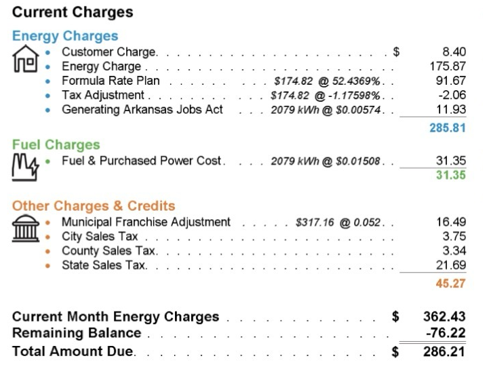
Entergy Arkansas customer bill showing "Generating Arkansas Jobs Act" line from June 2026.
But why was the Generating Arkansas Jobs Act (GAJA) so controversial?
GAJA fundamentally changed the relationship between utilities and ratepayers by allowing utilities to begin charging ratepayers for power plants under construction, so long as those power plants are deemed by regulators to be “strategic investments,” and so long as the “strategic investments” are not wind energy facilities that are located in Arkansas. In other words, wind energy facilities that generate jobs in other states such as Texas and Louisiana are eligible for Construction Work in Progress (CWIP) under GAJA, but wind energy facilities that generate jobs in Arkansas are not. Entergy Arkansas, SWEPCO, and other utilities have already moved to get strategic investment riders - which will be called a “GAJA rider” on ratepayers’ electricity bills - approved through the PSC. Starting in June, Entergy Arkansas customers will see the new charges under the GAJA rider for both the Jefferson Power Station (JPS) natural gas plant and the Cypress Solar field and battery installation.
“The Generating Arkansas Jobs Act was designed to reduce the regulatory oversight of the Commission to expedite getting stuff built,” Mahan said. “Typically, a utility has not been allowed to put the cost of a power plant into the rates until it is up and running. And that, historically, has been a good provision to make sure utilities don’t take on risky bets. But if you have construction work in progress, you can start charging the ratepayers immediately. The argument for this reform, called CWIP or ‘construction work in progress,’ is that it reduces costs for ratepayers in the long run because you can amortize the costs a bit earlier, reducing the costs of interest on private debt utilities have to raise to pay for new assets.
However, the opposing argument is that you could be going along and paying for a new powerplant that for one reason or another, never turns on. And ratepayers could end up paying for a hole in the ground, a powerplant that never generates anything for them. It puts all the risk on ratepayers and removes risk for banks and the utility.” This is contrary to the Arkansas PSC longstanding practice of only allowing public utilities to charge their Arkansas retail electric customers for power plants that are “used and useful.”
GAJA wasn’t the first legislative intervention
While GAJA was one of the latest and most controversial changes in Arkansas utility law to date, GAJA followed the 2015 adoption of the Formula Rate Review Act and the implementation of Formula Rate Plans (FRP). The Formula Rate Review Act - Act 725 of the 2015 Session - enabled Entergy Arkansas to go 10 years without going through a full rate case proceeding to raise revenue from ratepayers - it also allowed the company to raise rates by around 4 percent each year.
On the back of your bill from Entergy, you will see a rider charge for the FRP. This can be a huge part of the Energy Costs section of your bill that factors in your electricity usage with riders that show how Entergy is recovering costs for fuel, infrastructure buildouts and maintenance, among other things.
As Mahan and others have pointed out, the implementation of Formula Rate Plans is when more regulatory oversight started being stripped from the Public Service Commission, as Entergy Arkansas and other utilities were able to gradually raise rates without challenge.
Utility reforms around the country reflect a broad national push to accelerate project delivery and re-balance regulatory oversight. Whether these changes reduce overall costs in the long term or shift more risk onto ratepayers will depend on how regulators apply the new frameworks and how transparently they communicate their decisions. The debate is far from over—and the coming years will reveal which model serves Arkansans best.
The changes shaping Arkansas’ energy future are already affecting what is included on the bills arriving in our mailboxes and how utilities justify their investments. If you’re a ratepayer, business owner, or advocate for affordable energy, your voice matters. You can:
- Attend PSC hearings
- How are these riders affecting you and your bills? Let Public Commission Staff members or your local legislator know how your utility bills are affecting you
- Submit a public comment on the latest Entergy Arkansas rate case docket
- Join the Powering Arkansas Facebook group or newsletter list to stay informed about new energy legislation going into the 2027 Legislative Session
Writers with the Southern Renewable Energy Association and Powering Arkansas are writing these stories because regulatory decisions shape everyday life, from affordability to reliability, and yet they’re still often a mystery to the average consumer. Our aim is to provide transparent recaps of these meetings and show how you can participate in public comment or hearings. Keep up with regulatory affairs in Arkansas by following Powering Arkansas on Facebook and sign up for email updates.